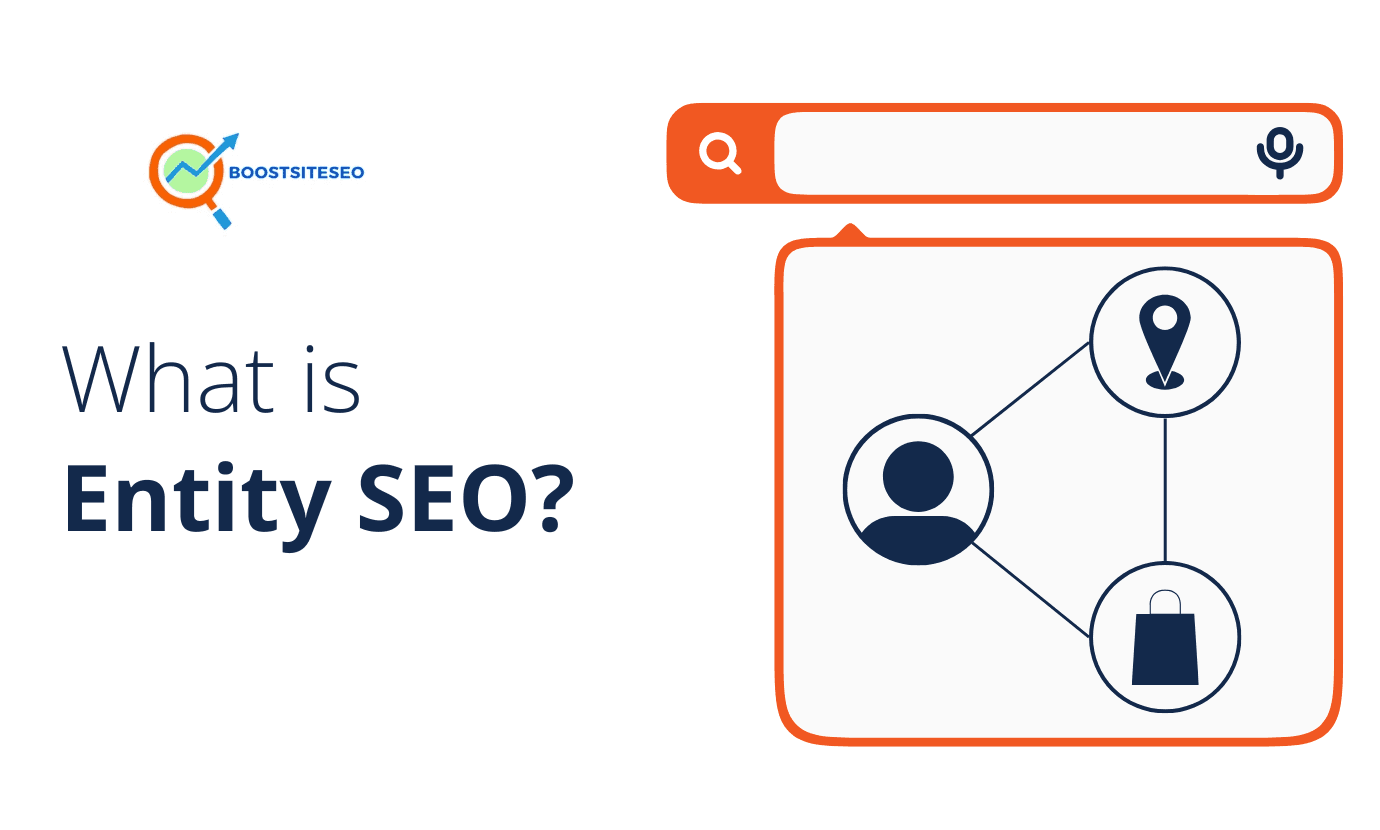
Here's everything you need to know about entities – what they are, why they matter in SEO, and how to use entities to rank content.
Let me explain.
First of all, Google does not read your website the way you do.
You see words. Google sees things and labels them entities: People. Places. Brands. Concepts. Products. Ideas. These are entities. Your entities are the building blocks of how Google understands the entire internet - your product or service.
If your brand is not a recognized entity on the internet, you are invisible in search results. Not because your content is bad. But because Google does not yet understand who you are, what you do, and why you are relevant.
Entity SEO fixes that.
This guide explains exactly what entity SEO is, why it matters for visibility, and the specific steps to build your presence in Google's Knowledge Graph.
Entity-based SEO is an approach in search engine optimization that focuses on the concept of entities as the central element, rather than relying solely on keywords.
Entity SEO is the practice of optimizing your website and online presence, so Google recognizes your brand as a distinct, credible entity in its Knowledge Graph. When Google understands your brand as an entity, it connects you to related topics, people, and concepts. This improves rankings, drives AI Overview citations, unlocks Knowledge Panels, and builds authority that compounds over time.
In SEO, an entity is any uniquely identifiable thing. A person. A place. A company. A concept. A website. An Address. A Name. A product. A date.
Entities are language-independent. "Coca-Cola" is the same entity whether you search in English, Spanish, or Urdu. They have attributes (facts) and relationships to other entities.
When you search "Elon Musk," Google is not matching the string of letters "E-l-o-n M-u-s-k." It is pulling a pre-built entity with attributes: founder, Tesla, SpaceX, South Africa, net worth, X (Twitter).
Search engines understand the meaning behind the name, not just the name itself.
The Knowledge Graph contains billions of entities and trillions of connections between them. This allows search engines to understand "Michael Jordan the basketball player" versus "Michael Jordan the statistician" instantly.
Your brand, your services, your team members, your location, your area of expertise: all of these are entities too.
The goal of entity SEO is to get Google to recognize and correctly understand all of them.
Google's Knowledge Graph is a massive database that maps relationships between entities.
Think of it as a web of connected nodes. Each node is an entity. Each connection is a relationship. "Tesla" (node) connects to "Elon Musk" (node) through the "CEO" relationship (edge). This structure allows Google to traverse connections and understand complex relationships instantly.
Google's Knowledge Graph is fed by a mix of structured and unstructured sources, including Wikipedia, Wikidata, official websites, government databases, reputable publishers, and trusted business profiles. Schema markup on websites also plays a supporting role. No single source guarantees inclusion. Google looks for agreement across multiple sources.
If your brand information is consistent everywhere, Google gains confidence in the entity.
The Knowledge Graph powers:
If your brand is in the Knowledge Graph, you are eligible for all of these. If you are not, you are competing only through traditional keyword matching. This is why most established companies and small companies that publish more and are consistent appear on top of the search.
Search has fundamentally changed.
Traditional SEO focuses on matching keywords to queries. On the other hand, entity SEO optimization focuses on clarifying meaning so Google and AI systems can accurately place your page within their semantic networks.
ChatGPT alone sees over 800 million active users weekly and handles more than 2.5 billion prompts daily, yet fewer than 25% of the most-mentioned brands are also the most-sourced. This is the same for other AI agents.
That gap exists because most brands have not built the entity signals that AI systems use to decide who gets cited.
In AI-driven search, visibility means being cited, referenced, or used as a source. This is where Entity SEO becomes important.
Only entities with clear identity and trust signals qualify. Pages without entity clarity are ignored, even if they rank traditionally. This is the difference between being visible and being forgotten.
Search engines like Google have developed sophisticated algorithms to understand and categorize entities and their relationships. For example, if someone searches for “Apple,” the search engine must determine whether the user means the fruit or the technology company. Entity-based SEO helps search engines make these distinctions by providing clear, contextual information.
To implement entity-based SEO, content creators and marketers focus on:
Entity identification: Recognizing and explicitly mentioning relevant entities within the content.
Contextual relevance: Ensuring that the content surrounding an entity is relevant and provides clear context. This might involve discussing related entities, historical information, or other data that helps define the primary entity.
Structured data: Using schema markup to help search engines understand the entities and their relationships within the content.
Authority and expertise: Building a site’s authority on specific entities by creating comprehensive, authoritative content around those topics.
Before you start building, you need to know what you are building around.
Start with three categories:
1. Brand and product entities
Your company name, services, products, team members, and partner brands. These are the core of your entity identity.
For instance, at BoostSiteSEO, this includes BoostSiteSEO (organization entity), SEO services, AEO services, GEO services, local SEO, keyword research, content marketing, and digital training.
2. Niche-specific topic entities
Industry terms, tools, concepts, and influential people your audience cares about. For an SEO agency: Search Engine Optimization, E-E-A-T, backlinks, schema markup, Google Business Profile, featured snippets, and AI Overviews.
3. Semantically related entities
Related concepts that appear alongside your core topics across the web. Use Google's Knowledge Graph API, InLinks, or simply look at the related searches and Knowledge Panel connections for your main topics to find these.
Write these down. This becomes your entity map. Every piece of content you create should reinforce these entities and the relationships between them.
The first thing Google needs is consistency. Your brand name, description, and core information need to be identical everywhere they appear online. Your website, Google Business Profile, LinkedIn, Facebook, Twitter, Crunchbase, Wikipedia (if applicable), and every directory.
The system continuously updates as new information appears. It evaluates consistency, authority, and source reliability. Structured data, authoritative references, and consistent branding help Google confirm entity details faster.
The more sources consistently confirm the same information about your brand, the more confident Google becomes in recognizing you as a distinct entity.
What to standardize:
Schema markup is the most direct signal you can send to Google about your entity.
Organization schema is structured data code that explicitly tells Google: "This website belongs to this organization, with these attributes and these relationships."
A complete Organization schema includes:
@type: Organization
name: BoostSiteSEO
url: https://boostsiteseo.com
logo: [logo URL]
description: [business description]
foundingDate: [year]
sameAs: [links to your profiles on LinkedIn, Facebook, Twitter, etc.]
contactPoint: [phone and email]
address: [if local]
The sameAs property is particularly powerful. It links your website entity to your profiles on other authoritative platforms. This tells Google that all the profiles refer to the same entity, strengthening your entity coherence across the web.
This is where large organizations and large creators beat small and medium ones. They have a Wiki presence.
Wikipedia is one of Google's most trusted sources for entity information. Google's Knowledge Graph is fed by Wikidata, Wikipedia, official websites, government databases, directories, social platforms (SameAS), and reputable publishers.
Getting a Wikipedia page for a small business is difficult. Wikipedia requires notability criteria that most companies don't meet early on. But Wikidata is accessible to almost any brand. Create a Wikidata entry for your brand, add your key attributes, and link it to your website. This is one of the most direct paths to Knowledge Graph inclusion available to any business.
Steps to add your brand to Wikidata:
Even if you never get a Wikipedia page, a well-populated Wikidata entry provides Google with structured entity data that it can incorporate into the Knowledge Graph.
E-E-A-T signals tell AI systems which entities deserve visibility. Strong E-E-A-T helps Google validate whether an entity is credible, knowledgeable, and connected to real-world signals such as authorship, brand recognition, citations, and reputation.
Named, credentialed people are some of the strongest entities you can associate with your brand. Google has always trusted people-authored content more than anonymous content.
Building person entities for your team:
When Google sees a named person consistently publishing content in a specific topic area, linked across multiple platforms, it begins to build an entity profile for that person. That person's entity authority flows to the brand they represent.
By creating interconnected, high-quality content around a core topic, you strengthen semantic relationships and entity associations in Google's Knowledge Graph. This improves your chances of ranking for broader queries, earning AI Overviews, and building trust through E-E-A-T signals.
Content clusters are not just an SEO tactic. They are an entity-building tool.
When Google sees a website with fifteen interlinked articles all covering different dimensions of the same topic, each one mentioning the same core entities and reinforcing the same relationships, it builds a strong entity association. Your domain becomes the authority on that topic in Google's semantic network.
Every page should be unambiguously about one canonical entity. That means aligning your title, H1, and schema mainEntityOfPage so they point to the same concept. Your entire site should collectively represent the entities and sub-topics that define your niche. Think of it as building a mini Knowledge Graph where each node (page) reinforces your overall topical authority.
How to build an entity-rich content cluster:
For BoostSiteSEO, the SEO entity cluster looks like: pillar page on SEO services, clusters on keyword research, technical SEO, on-page SEO, local SEO, link building, E-E-A-T, AEO, GEO, and content strategy. Each cluster page reinforces the same set of core entities and the relationships between them.
Google builds entity understanding not just from your own website but from how you are described by other websites.
Make sure your brand entities are used consistently across your website, social profiles, directories, and press coverage.
When authoritative websites mention your brand name in the context of your industry, link to your website, and describe your services accurately, they are sending entity signals to Google. Each mention is a data point Google uses to build its understanding of who you are.
How to earn quality entity citations:
One effective baseline includes citations across trusted directories and branded nofollow links to solidify entity presence. Even unlinked brand mentions contribute to entity recognition. Google's natural language processing identifies your brand name in context across the web even without a hyperlink.
Your Google Business Profile is one of the most powerful local entity signals available. It is how Google verifies that your business exists at a specific location, with specific attributes, in a specific category.
Google Business Profiles identify businesses as entities, while the Knowledge Panel identifies products and concepts.
A fully optimized Google Business Profile does not just help your local search rankings. It confirms your entity to Google's Knowledge Graph and makes your brand eligible for local knowledge panels, voice search results, and AI-generated local recommendations.
Entity optimization for your Google Business Profile:
Entity building is not a one-time task. It is an ongoing process of monitoring, reinforcing, and expanding your entity signals over time.
Earning a Google Knowledge Panel is crucial because it signals to Google that your brand, person, or organisation is a verified, authoritative entity. A Knowledge Panel enhances visibility in search results, builds trust with users, and strengthens semantic connections in Google's Knowledge Graph.
How to monitor your entity presence:
When you earn a Knowledge Panel, claim it through Google Search Console. This allows you to suggest edits and verify information, strengthening the accuracy of your entity data in Google's systems.
SEO, GEO, AEO and E-E-A-T are not separate strategies. They are four dimensions of the same goal: being recognized as a trusted, authoritative source.
AI-powered results like Google's AI Overviews or Bing's Copilot rely on entity knowledge to generate summaries. If your brand is not recognized as a relevant entity, it may never appear in these high-visibility boxes.
Build your entity presence and all four disciplines become more effective simultaneously.
|
Tool |
What It Does |
|
Google's Knowledge Graph API |
Check whether your entity exists in the Knowledge Graph and what attributes are associated with it |
|
Google Rich Results Test |
Validate your schema markup and see how Google interprets your structured data |
|
InLinks |
Map your entity graph, identify entity gaps, and optimize content for entity salience |
|
Google NLP API |
Analyze how Google's natural language processing reads your content and identifies entities |
|
Wikidata |
Create and manage your brand's Knowledge Graph entry directly |
|
Google Search Console |
Monitor how your entity pages perform in search and track Knowledge Panel claims |
|
Ahrefs / Semrush |
Find entity-related keywords, track topical authority, and monitor brand mentions |
|
Google Alerts |
Monitor unlinked brand mentions that contribute to entity recognition |
Google has moved from matching strings of letters to understanding meaning.
Your keywords still matter. But the brands that will dominate search visibility today and beyond are the ones that Google genuinely understands. The ones with clear entity definitions, consistent information across the web, authoritative external citations, and content that reinforces the same semantic relationships across dozens of interconnected pages.
Entity SEO is not advanced. It is fundamental. It is the work of making sure Google knows who you are, what you stand for, and why you belong at the top of results for the topics that matter most to your business.
BoostSiteSEO builds complete entity SEO and GEO strategies for businesses that want to be recognized as authoritative entities across traditional search, AI Overviews, and voice search. Start your free audit at BoostSiteSEO.com
What is entity SEO?
Entity SEO is optimizing your website and online presence so that Google recognizes your brand as a distinct, well-understood entity. Instead of just matching keywords, Google maps relationships between entities. Entity SEO ensures your brand, your topics, and your expertise are correctly represented in that map.
What is Google's Knowledge Graph?
Google's Knowledge Graph is a database that maps relationships between entities, containing billions of entities and trillions of connections. It powers Knowledge Panels, AI Overviews, voice search answers, featured snippets, and rich results. Getting your brand recognized in the Knowledge Graph improves your visibility across all of these features simultaneously.
How do I get my brand into Google's Knowledge Graph?
There is no single direct submission process. Google builds its Knowledge Graph by finding consistent information about your brand across multiple trusted sources. The most effective approach is to create a Wikidata entry, implement Organization schema on your website, build consistent profiles across authoritative platforms, and earn mentions and citations from credible external sources.
Is entity SEO the same as semantic SEO?
They are closely related but distinct. Semantic SEO means optimizing for meaning and intent instead of single keywords. Entity SEO emphasizes defining and structuring identifiable entities and their relationships. In practice, both strategies overlap significantly. Entity SEO is best understood as the structural foundation that semantic SEO builds on.
How long does it take to build entity authority?
Entity authority is a long-term investment that compounds significantly over time. Basic entity signals like Organization schema, consistent profiles, and Wikidata entries can be implemented within days. Google recognizing and incorporating your entity typically takes 2 to 6months of consistent signal building. Earning a Knowledge Panel and appearing in AI Overview citations for competitive topic entities can take six to twelve months.
Does entity SEO replace keywords?
No. Keywords remain important for capturing search demand. Entity optimization provides the semantic foundation that makes keyword usage more effective. Think of keywords as the language users speak, and entities as the concepts they actually want. The strongest SEO strategies optimize for both.
