Here are 6 B2B marketing insights every modern marketer needs to understand about B2B marketing to stay competitive.
B2B marketing is entering a new era. .. and it’s not the usual.
For years, brands focused on lead volume, aggressive outreach, and short term campaigns.
But the companies winning in 2026 are playing a different game. They are building trust, creating meaningful customer experiences, and using data with precision.
Today’s buyers are smarter, more informed, and harder to convince. Decision makers want authenticity. They want relevance. They want proof before they commit.
According to recent LinkedIn research, the future of B2B marketing will belong to brands that master six critical areas: video marketing, quality demand generation, proactive measurement, event driven engagement, UGC or creator led trust, and AI powered execution.
Here is what every modern marketer needs to understand about B2B marketing to stay competitive.
Video has become one of the most powerful tools for building trust and driving engagement across the entire buyer journey in B2B marketing.
Research shows that 78% of B2B marketers already use video content, while 56% plan to increase investment in video marketing strategies. Even more importantly, 94% of marketers say trust is the most important factor in B2B success.
This shift makes sense.
Business buyers no longer want robotic messaging. They want to see real people, authentic conversations, and practical insights delivered in a human way.
Video helps brands with content distribution in many ways:
One of the strongest findings from the report revealed that video warmed audiences are 1.6 times more likely to open lead generation forms compared to cold audiences.
The most effective B2B companies are focusing on:
As younger decision makers continue to dominate buying committees, video content will become essential for long term B2B growth.
Traditional lead generation focused on one thing: volume.
More leads meant more opportunities.
That model is becoming outdated.
Modern B2B marketing is now centered on attracting high intent buyers rather than collecting massive databases of unqualified contacts.
According to the report, 57% of marketers say pipeline goals are increasing, forcing brands to rethink how they approach demand generation.
Successful marketers are now prioritizing:
Predictive audience targeting has already delivered up to 21% lower cost per lead, while LinkedIn campaigns achieved a 113% return on ad spend compared to other major networks.
The strongest demand generation strategies in 2026 will focus on:
|
Old Approach |
Modern Approach |
|
Broad targeting |
Precision targeting |
|
Lead volume |
Pipeline contribution |
|
Short campaigns |
Continuous nurturing |
|
Immediate ROI |
Sustainable growth |
|
Generic messaging |
Personalized engagement |
Companies that continue chasing vanity metrics will struggle to compete against brands building deeper buyer relationships.
Most marketing analytics tell businesses what already happened.
That is no longer enough.
Modern B2B organizations need proactive measurement systems that help guide future decisions before opportunities are lost.
The average B2B buyer journey now lasts 211 days, making long term measurement critical for revenue growth.
At the same time, 78% of B2B CMOs say proving ROI has become more important than ever.
The brands succeeding today are moving beyond simple dashboard reporting. They are building marketing intelligence systems that help them:
The report also found that confident marketers are four times more likely to align closely with sales teams.
Leading companies now follow a proactive measurement framework:
Marketing teams that fail to connect measurement directly to revenue will increasingly lose executive support.
B2B events are evolving far beyond conferences and networking sessions.
The smartest companies now treat events as continuous engagement ecosystems that build momentum long after the physical experience ends.
This is one of the biggest shifts happening in modern event marketing.
Success is no longer measured by registration numbers alone. Pipeline impact and customer engagement now matter more.
According to the report, LinkedIn members exposed to event ads are 28% more likely to engage later. Salesforce also influenced billions in Dreamforce pipeline through event driven strategies.
Despite the rise of digital marketing, events continue to play a major role because they create:
The most effective B2B brands now extend event engagement:
This continuous experience model creates much stronger pipeline performance.
Trust has become the currency of B2B marketing.
And trust comes from people, not logos.
Modern buyers increasingly rely on creators, industry experts, employees, and customer voices when making purchasing decisions.
The report found that 82% of buyers are influenced by B2B creator content. Additionally, employee networks are twelve times larger than company pages.
This explains why thought leadership marketing and UGC are rapidly becoming essential parts of successful B2B growth strategies.
User generated content, commonly known as UGC, is no longer limited to consumer brands on Instagram or TikTok.
In B2B, UGC includes:
Buyers trust real experiences far more than polished advertising.
When potential customers see actual clients discussing results, sharing feedback, or demonstrating how they use a product or service, credibility increases immediately.
This creates social proof that traditional advertising often struggles to achieve.
People trust people.
That simple principle is reshaping modern B2B marketing strategies.
Companies using creator led marketing and UGC benefit from:
The report also revealed that Thought Leader Ads generate 2.5 times higher click through rates with 60% lower cost per click.
The strongest B2B brands in 2026 will invest heavily in:
Businesses hiding behind corporate messaging will struggle to earn attention in an increasingly human centered marketplace.
Artificial intelligence is no longer a competitive advantage by itself.
Everyone has access to AI tools now.
The real advantage comes from knowing how to use AI strategically.
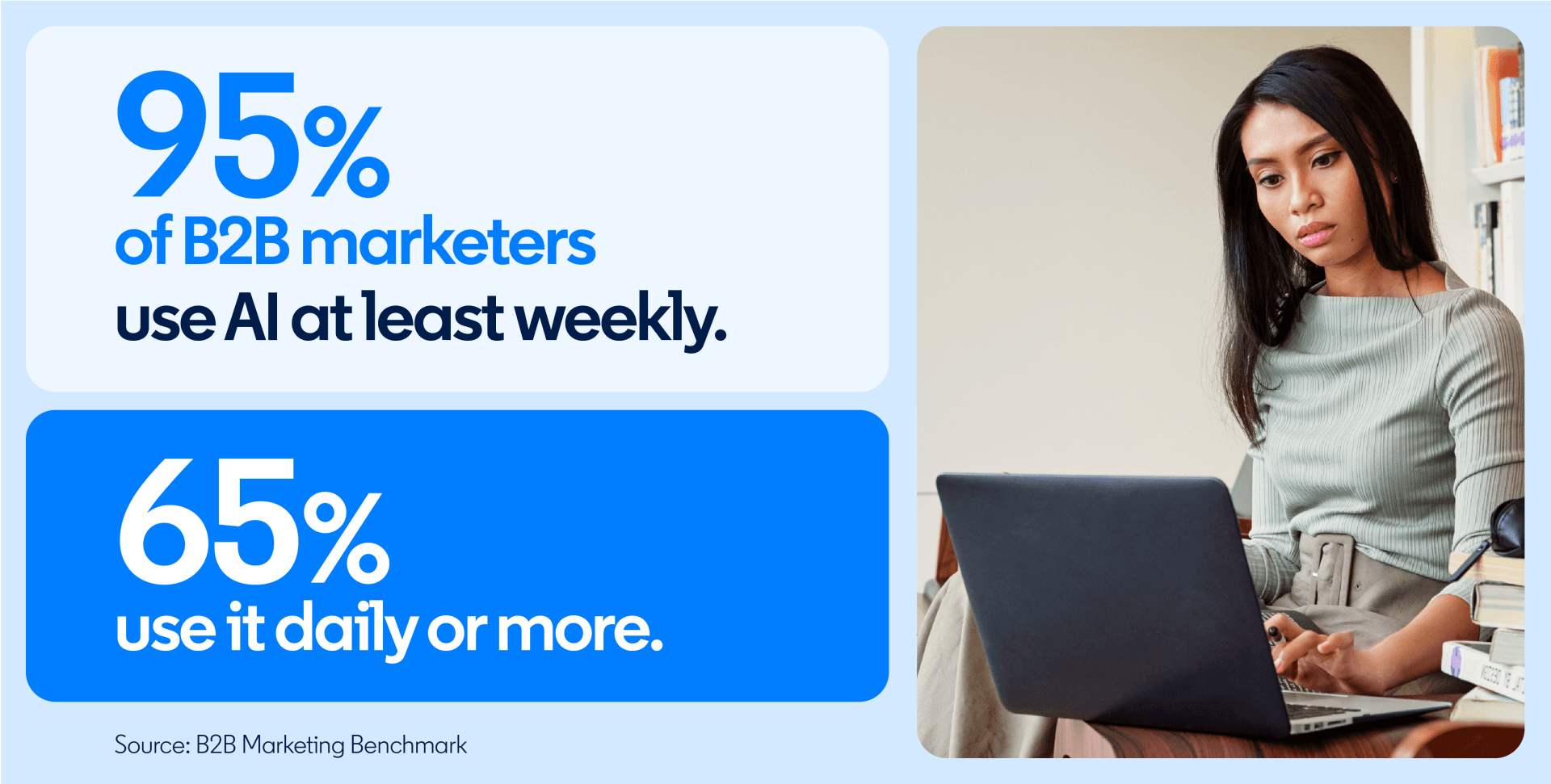
According to the report, 95% of B2B marketers already use AI weekly, while 65% use it daily. Yet only 32% rate their AI expertise as extremely good.
This gap creates a major opportunity.
The companies that invest in AI upskilling today will outperform competitors tomorrow.
Modern marketers are using AI to:
AI powered targeting already delivers significantly lower cost per lead performance for many advertisers.
At the same time, marketers report saving nearly 20 hours per week through AI enabled workflows.
Winning companies are not replacing marketers with AI.
They are empowering skilled marketers with AI.
That distinction matters.
The future belongs to teams that combine:
The biggest misconception about modern B2B marketing is that technology alone drives growth.
It does not.
The most successful brands in 2026 will win because they understand people better.
They will use video to create connections. They will focus on quality audiences instead of vanity metrics. They will build trust through creators, employees, and user generated content. They will measure performance intelligently. They will turn events into ongoing engagement engines. And they will use AI to amplify human expertise rather than replace it.
B2B marketing is becoming more human, not less.
The companies that recognize this shift early will build stronger pipelines, better customer relationships, and sustainable long term growth.
If your business wants to improve visibility, generate qualified leads, and build a stronger digital presence in 2026, visit Boost Site SEO and discover strategies designed to help brands grow faster in an increasingly competitive online market.
