Master local SEO with this comprehensive guide covering Google Business Profile, citations, reviews and AI visibility.
And don’t get me wrong, but if you’re not ranking in the top three of Google Maps, you’re still not going to get views.
When someone searches for a service near them, the map results appear before everything else on the page.
If your business isn't in those results, you're not in the consideration set at all.
This SEO guide shows you exactly how to get there using Local SEO.
The Google Maps local pack, also called the Google 3-pack, is the block of three business listings that appears at the top of local search results alongside a map.
These results appear alongside a map and include key business details like the name, address, and opening hours.
It shows up when someone searches with local intent, and the basis of Local SEO.
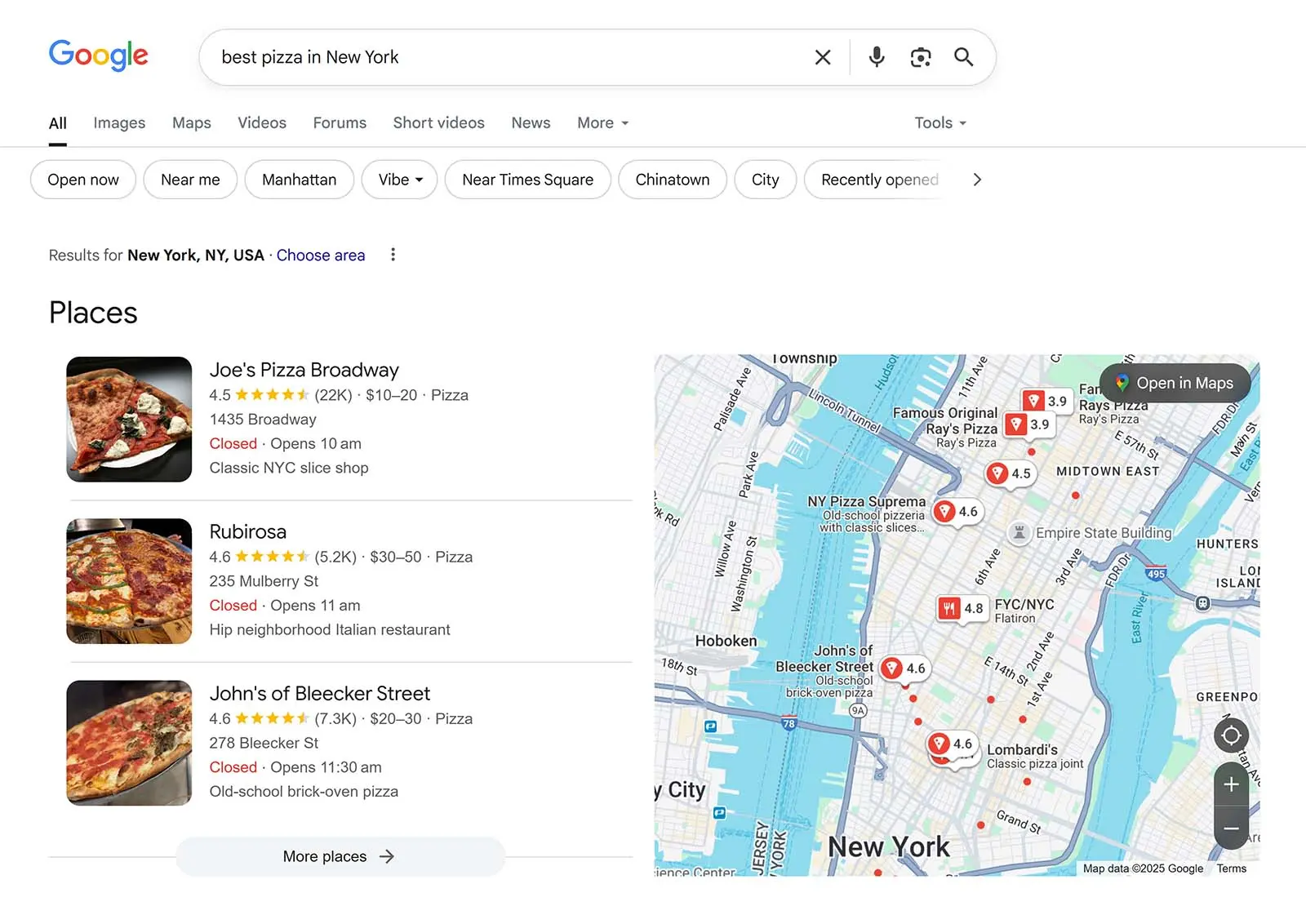
Searches that trigger it include:
A wide range of local query structures can trigger the 3 pack, including:
These variations signal local intent. In other words, someone in a specific area is looking for a specific place or service. And Google responds by showing relevant local businesses in the 3 pack. Google is also testing AI local packs, which include AI-generated summaries for the top ranking businesses.
The Google 3-pack appears next to a map, and you should be there when the 3-pack is listed. Each listing in the local pack shows the business name, star rating, address, phone number, hours, and a link to the website or directions.
Claim the space because this is the most valuable real estate in local search. This is the most important SEO for small businesses.
The local pack appears at the top of search results, above the traditional organic blue links. That means local pack businesses get seen before anyone else on the page.
76% of people who search for something nearby visit a related business within 24 hours, and 28% of those searches result in a purchase. Getting into the local pack is not a vanity metric. It is a direct driver of phone calls, foot traffic, and revenue.
Landing a spot in the Google 3 pack puts your business in front of local customers right when they’re searching for what you offer.
This has three key benefits for your business:
Google uses three factors to rank local businesses:
You can't move your business closer to a searcher. But you can control relevance and prominence, and that's exactly where the work lives.
You cannot appear in Google Maps results without a verified Google Business Profile. This is the non-negotiable starting point.
Go to google.com/business and sign in with your Google account. Search your business name. If it already exists and is unclaimed, claim it. If it doesn't exist, create a new listing from scratch.
When creating a listing you'll need to provide:
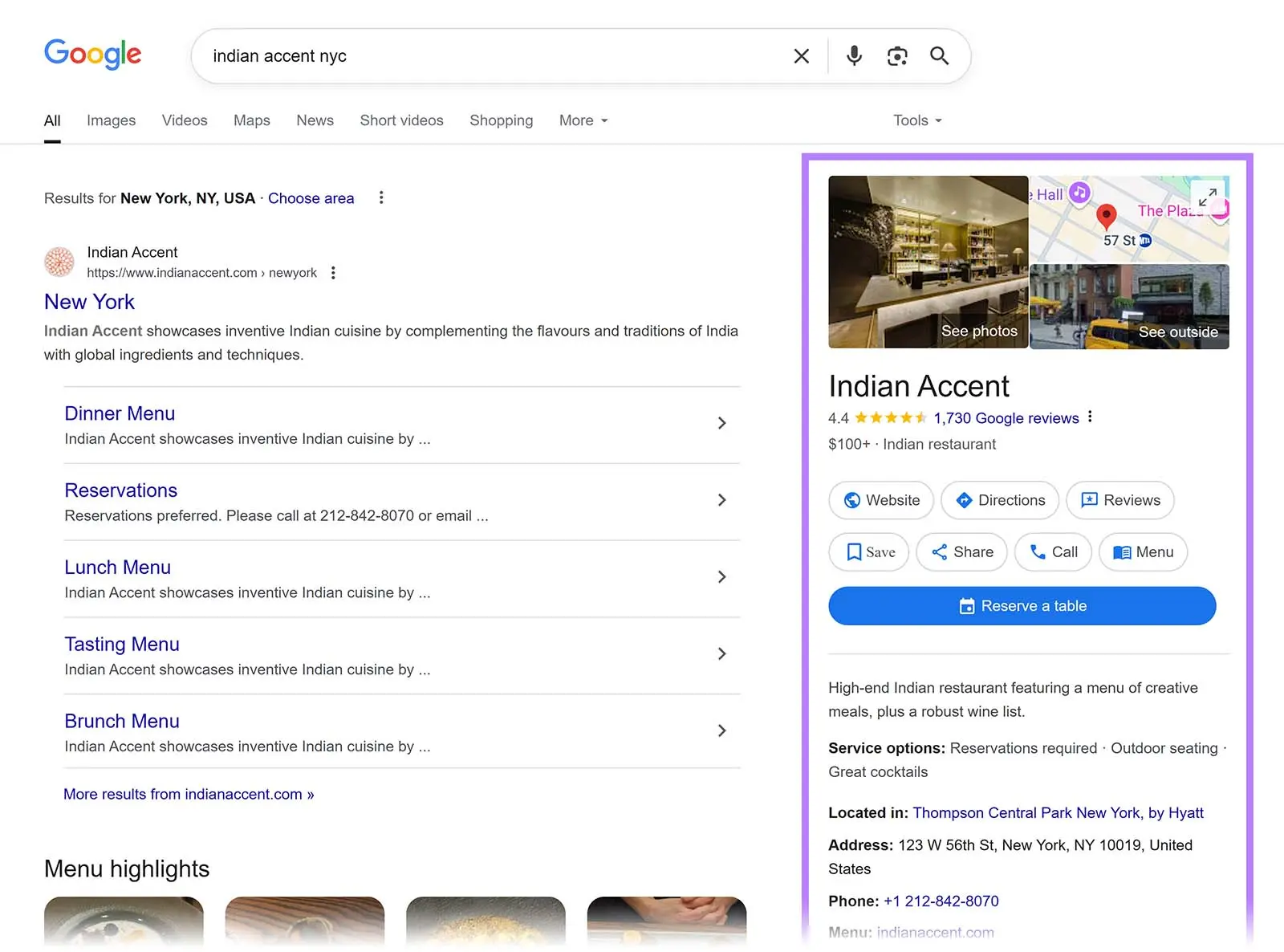
After that, Google will ask you to verify. Depending on your business type and location, verification options include phone, email, postcard, video recording, or a live video call. Not all options are available to every business — Google will show you what applies to you.
Once verified, your profile becomes eligible to appear in Google Maps and the local pack.
Claiming your profile is step one. Optimizing it is where you start outranking competitors.
Customers are 70% more likely to visit businesses with a complete Google Business Profile. A complete, active profile signals to Google that your business is legitimate, relevant, and trustworthy.
Complete every field:
The businesses dominating local pack results are not just verified. They are consistently active. Google rewards profiles that are regularly maintained with higher visibility.
NAP stands for Name, Address, Phone number. These three details need to be absolutely identical across every platform where your business appears online.
Your website. Your Google Business Profile. Yelp. Facebook. Local directories. Industry platforms. Every single one.
Why does this matter so much? Google cross-references your business information across hundreds of sources to confirm that your business is real and that the information it holds is accurate. When it finds inconsistencies — "Street" on one platform and "St." on another, a different phone number on Facebook, an outdated address on a directory — it treats those inconsistencies as uncertainty about your credibility. That uncertainty costs you rankings.
How to audit your NAP:
Set a reminder to check this quarterly, especially any time you change premises or update your phone number.
A local citation is any online mention of your business's NAP information. Citations appear on directories, review sites, chamber of commerce websites, industry platforms, and local news sites.
The more credible platforms consistently listing your business, the more confidence Google has in your legitimacy. That confidence directly contributes to your local pack rankings.
Priority directories for every local business:
Get listed in directories such as PigiaMe, BrighterMonday, Yellow Pages Kenya, and local county business directories.
Reviews are the most visible trust signal in local SEO. They affect your local pack rankings directly and they show up prominently on your profile where potential customers are deciding whether to contact you.
Google looks at:
A review system that works:
The businesses with the most reviews aren't lucky. They have a process. Build these steps into your workflow:
Do this consistently with every customer and your review count grows steadily every month without any special campaigns.
Responding to reviews:
Respond to every review. Positive reviews deserve a specific, personal reply — not a copy-pasted "Thanks for your kind words." Negative reviews deserve a calm, professional response that acknowledges the concern and offers to make things right publicly.
Never argue with a reviewer online. How you handle criticism in public is often more persuasive to potential customers than the review itself.
Your website reinforces your Google Maps presence. The two work together. A well-optimized website tells Google your business is genuinely relevant to the local searches you want to appear for.
Location-specific service pages.
Create a dedicated page for each service you offer in each area you serve. A cleaning company serving Chicago, Nairobi, and Amsterdam needs separate pages for each city, each with content that specifically addresses customers in that location.
Each page should include:
Blog content targeting local queries.
Publish content that answers the specific questions your local customers ask:
Each post should link back to the most relevant service or location page on your site.
Add LocalBusiness schema markup.
Schema markup is code that explicitly tells Google your business name, address, phone number, and service area. Add it to your homepage and every location page. It makes your data machine-readable and helps Google display your information accurately in search results.
Backlinks from other local websites are one of the strongest signals for local pack rankings. A link from a respected local publication, community organization, or complementary local business tells Google you are a recognized, trusted part of your local area.
How to earn local backlinks:
One strong link from a respected local media outlet carries more weight than fifty directory listings. Prioritize quality.
Once your local SEO is running, use these free tools to measure what's working:
A growing share of local searches are now happening through AI tools. People ask ChatGPT which accountant to use in their city. They ask Google's AI Overview to recommend a plumber nearby. They use voice search on their phones to find services while driving.
The businesses that appear in these AI-generated local recommendations are the same ones dominating traditional local SEO: complete Google Business Profiles, consistent NAP, strong reviews, and authoritative local content. The foundation doesn't change. This is why you need to combine Local SEO with AEO and GEO.
Local SEO is your preparation for every search channel, not just the traditional results page.
Use this to assess where you stand and what to tackle next:
Google Business Profile:
NAP and Citations:
Website:
Authority:
Getting into the local pack is not complicated. It rewards consistency, accuracy, and genuine authority over time.
The businesses that commit to these seven steps and maintain them month after month are the ones that own the top of local search results in their area.
BoostSiteSEO builds local SEO strategies for businesses in the USA, Europe, and Kenya. From Google Business Profile optimization to local content and citation building, we handle the full picture.
1. How long does it take to rank in Google Maps?
Most businesses see meaningful local pack movement within two to three months of consistent optimization. Competitive markets take longer. The full effect of a complete local SEO strategy compounds over six to twelve months.
2. Does having more reviews guarantee a local pack ranking?
Reviews are one of the three main ranking factors but not the only one. Relevance, distance, and overall prominence all contribute. A business with fewer but very recent reviews will often outrank one with many older reviews. Aim for consistent growth over time rather than a one-time surge.
3. Do I need a physical address to rank in Google Maps?
No. Service area businesses that go to the customer rather than the reverse can set a service area on their Google Business Profile instead of displaying a physical address. The same optimization principles apply.
4. What's the difference between ranking in Maps and ranking in regular Google results?
The local pack is governed primarily by your Google Business Profile, reviews, NAP citations, and local prominence. Organic results below the local pack are governed more by your website's technical SEO, content quality, and backlink profile. A complete local SEO strategy addresses both simultaneously.
5. How often should I post on my Google Business Profile?
At least twice a month. Regular posts signal to Google that your profile is actively maintained and help your profile appear more prominently. Use them to share offers, news, updates, and new content from your blog.
